
For a fleet or operator running 1000 miles a year, that gap is the difference between a truck that pays for itself and one that quietly drains the company account. Fleet optimization is all about closing that gap.
But how? It is not one fix; it is about recording, tracking, and analyzing past data for results-driven planning. That includes route, maintenance scheduling, driver coaching, and dispatch.
What Is Fleet Optimization?
Fleet optimization ensures every mile a truck runs generates revenue. It also focuses on reducing spending on idle time, wasted miles, and unplanned repairs.
The fleet optimization process covers route planning, maintenance scheduling, fuel management, driver performance tracking, dispatch decisions, and technology, all of which have a role in the trucking business.
The goal is not just to lower costs; it is to choose the best load with minimum empty miles and less idle time.
The intent is clear: higher revenue per truck, lower cost per mile.
Why Operational Efficiency Matters in Trucking
In a business with high competition and thin margins, operational efficiency is crucial for survival in the market. The same story is true for trucking.
ATRI's 2026 report shows that trucking operating costs rose in 2025, while freight rates lagged.
So, operational efficiency is what keeps a fleet solvent. A tighter operation not only lowers the cost per mile but also keeps trucks on the road longer. The dispatch team focuses on finding the better-paying load instead of grabbing whatever is available.
It also protects drivers' retention by ensuring they are paid on time and run predictable miles. It builds the kind of dependable service record that creates new opportunities to run on new lanes for new customers.
Tips to Optimize Your Fleet To Improve Operational Efficiency
There are key steps you can implement to improve fleet Operational Efficiency, whether you have a fleet of one truck or a hundred. Every step plays a crucial role and supports the others. Proper, on-time maintenance improves fuel efficiency and directly impacts fuel costs.
Software dependency for managing Fleets
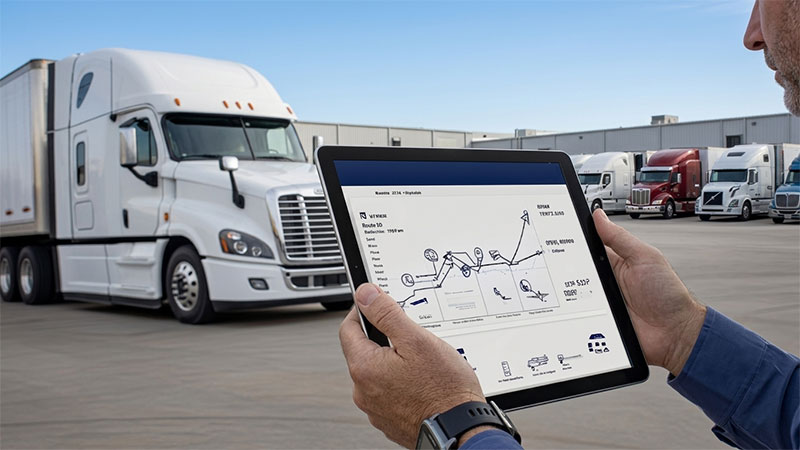
It is not easy to scale a truck business managed with spreadsheets and sticky notes. A software tool that manages and centralizes your fleet operations and maintains records in one place. Software also lets you access each truck's record separately, including maintenance records, fuel data, driver performance, and dispatch schedules.
Benefit: Prevent misssing missed maintenance, make quick decisions, keep dispatch, and maintain a paper trail for every truck.
Better Route Optimization
Every extra mile a truck runs without a load means it eats into its earnings. Route optimization considers every factor that cuts unnecessary miles. It may include traffic, weigh station hours, refueling stops, refreshment stops, and delivery time.
Better route planning not only saves hours and money but also reduces empty miles and unnecessary driving.
Benefit: Lower fuel spend, create the opportunity for more loads per week, and improve drivers' performance by hitting delivery windows instead of racing the clock.
Maintain Fuel Consumption
Although fuel costs remain almost the same when your truck hits the road with a full-capacity load or a partially loaded load. An idle truck also burns 0.5 to 1.0 gallons per hour with the engine running and nothing moving. So negotiate better for loads and cut idle time with policy limits, APUs, or bunk heaters.
Also coach drivers on smooth acceleration and steady cruise speeds.
Benefit: Thousands of dollars saved per truck annually with no capital investment beyond driver coaching.
Monitor Driver Behavior
Drivers' behavior matters as much as skills. Harsh braking without an emergency, overspeeding, and aggressive acceleration all impact fuel efficiency and increase accident risk. Tech tools like telematics and dash cams can help address driver behavior with real recorded data rather than guesswork. It is also useful to coach the driver later, which can directly impact fuel economy.
Benefit: improve fuel efficiency, lower accident risk, and lower insurance costs over time.
Schedule Preventive Maintenance
According to ATRI, Repair and maintenance costs rose 8.6 percent in 2025; this is the sharpest increase in fleet operating costs.
An unexpected minor repair costs far more than a scheduled oil change or brake inspection. Build and track a PM schedule around mileage and engine hours based on real data, not guesswork. This helps ensure on-time maintenance and that nothing is skipped.
Benefit: Fewer roadside breakdowns, more predictable maintenance costs.
Track Key Performance Metrics
Without measurement, you can't fix anything as precisely as needed. What are the key fleet performance metrics that need to be tracked? - Cost per mile, idle time, on-time delivery rate, and empty miles. Each metric impacts your overall profitability.
Benefit: Earlier problem detection, on-time fixing, no more revenue loss.
Make Better Dispatch Planning
Dispatch should be built around the driver's home location, hours-of-service limits, and favorable freight lanes. Keep the focus on that driver to cover more miles and meet minimum detention time.
Poor dispatch planning creates hidden inefficiency—leading to poor load sequencing and leaving good freight due to last-minute rushes.
Benefit: Higher truck utilization and fewer wasted hours waiting on the next assignment.
Lower Empty Miles
According to ATRI's most recent benchmarking data, empty miles (deadhead) average 16.7 percent of total miles industry-wide. Means every seventh mile driven without earning.
A reliable dispatcher team always monitors backhaul load planning and load board partnerships, and uses dispatch software expertly to flag return trips. They successfully cut empty miles from 17 percent to 12 percent.
Benefit: Maximum profitable miles
Use GPS and Telematics
GPS tracking gives dispatch real-time truck location, ETAs, and route deviations without a phone call. Paired with telematics, engine diagnostics, fuel usage, and harsh-event data, it turns every truck into a data source instead of a black box. A small carrier can start with basic GPS and add telematics modules as the fleet grows.
Benefit: Real-time updates and early warnings for mechanical issues help prevent roadside breakdowns.
Collect and Analyze Fleet Data
Collecting data means you have done the half. A monthly review turns numbers into decisions.
Break down the cost per mile for each truck and driver separately, not just the averages. Sometimes averages can hide the outliers costing the most money.
When you have time, set up a recurring one-hour or quick weekly review instead of relying on a fixed schedule.
Benefit: Recurring cost leaks get caught early instead of compounding over a full year.
Improve Vehicle Utilization
Even A well-maintained truck sitting at a terminal isn't earning anything. Every mile a truck runs on the road with a load clearly adds something to total profitability. Cross-training dispatchers to fill gaps between regular routes and strengthen relationships with brokers for backup freight keeps trucks moving instead of parked.
Benefit: Higher revenue per truck yearly
Train Drivers Continuously
One-time orientation training isn't enough for years on the road. Ongoing coaching in fuel-efficient driving, pre-trip inspections, equipment-specific training, and hours-of-service management helps keep performance from drifting. Telematics-based coaching programs typically show an additional 5 to 10 percent fuel savings.
Business benefit: Better fuel economy, fewer violations
Enhance Safety Programs
Even a minor accident can cost more than the repair bill and regular maintenance expenses, including downtime, insurance premium hikes, and damage to the CSA score.
Dash-cam, maintaining driver scorecards, refresher training, etc., help reduce incident rates over time.
Benefit: Lower insurance premiums, fewer claims, and a stronger DOT safety rating.
Streamline Administrative Processes
Manual invoicing, paper logs, and phone tag with brokers eat up your business hours that can be saved through digitizing BOLs, rate confirmations, and driver settlements.
A dispatch support or back-office platform that automates load tracking and paperwork gives owner-operators and small fleet managers more time to focus on growth instead of chasing paperwork.
Benefit: Faster invoicing, fewer billing disputes
Review Operating Costs Regularly
From time to time, compare your fleet cost numbers against ATRI benchmarks or your own previous data; it helps you know whether a rising expense is market-wide or specific to your fleet.
Benefit: An operating budget based on current numbers, not last year's assumptions.
Fleet Performance Metrics Every Fleet Manager Should Track
Metrics only help if someone actually looks at them regularly. These ten indicators, reviewed monthly, cover the areas most likely to affect a fleet's bottom line:
cover the areas most likely to affect a fleet's bottom line:
| Metric | What It Measures | Why It Matters |
|---|---|---|
| Fuel efficiency | Miles per gallon by truck and driver | Flags mechanical issues and driving habits that waste fuel |
| Cost per mile | Total operating cost divided by miles run | The core profitability number; ATRI put the 2025 industry average at $2.336 |
| Vehicle utilization | Revenue miles as a share of available time | Shows whether trucks are earning or sitting idle at the yard |
| Idle time | Engine hours running without the truck moving | Directly tied to wasted fuel and added engine wear |
| Driver safety score | Harsh-braking, speeding, and following-distance events | Predicts accident risk and insurance cost trends |
| Maintenance cost | Repair and PM spend per mile | R&M rose 8.6% in 2025; tracking it catches shop cost creep early |
| Downtime | Hours or days a truck is out of service | Every day down is a day with zero revenue |
| On-time delivery rate | Percentage of loads delivered within the window | Drives customer retention and repeat contracts |
| Empty miles | Deadhead miles as a share of total miles | Industry average sits near 16.7%; lower is more profitable |
| Revenue per truck | Total revenue divided by truck count | The bottom-line measure of whether optimization efforts are working |
Conclusion
Fleet optimization is not a one-time effort; it is a habit. Owner-operators and fleets maintain growth by analyzing performance, investing in technology promptly, and making data-driven decisions instead of guessing.